
How to Turn One Idea Into 3 Types of Content Using AI
Affiliate disclosure: This article contains an affiliate link. If you purchase through the link, we may earn a commission at no additional cost to you. We only recommend exploring products that are relevant to the subject being discussed.
Coming up with content ideas is rarely the biggest problem for people running a business online. The real challenge is doing something useful with those ideas without spending every day writing articles, planning videos, designing graphics and trying to keep social media accounts active.
You might have an excellent business idea or know something that could genuinely help people. But what happens after publishing one blog post? You move on to another idea, start from scratch and repeat the same process.
There is a smarter approach.
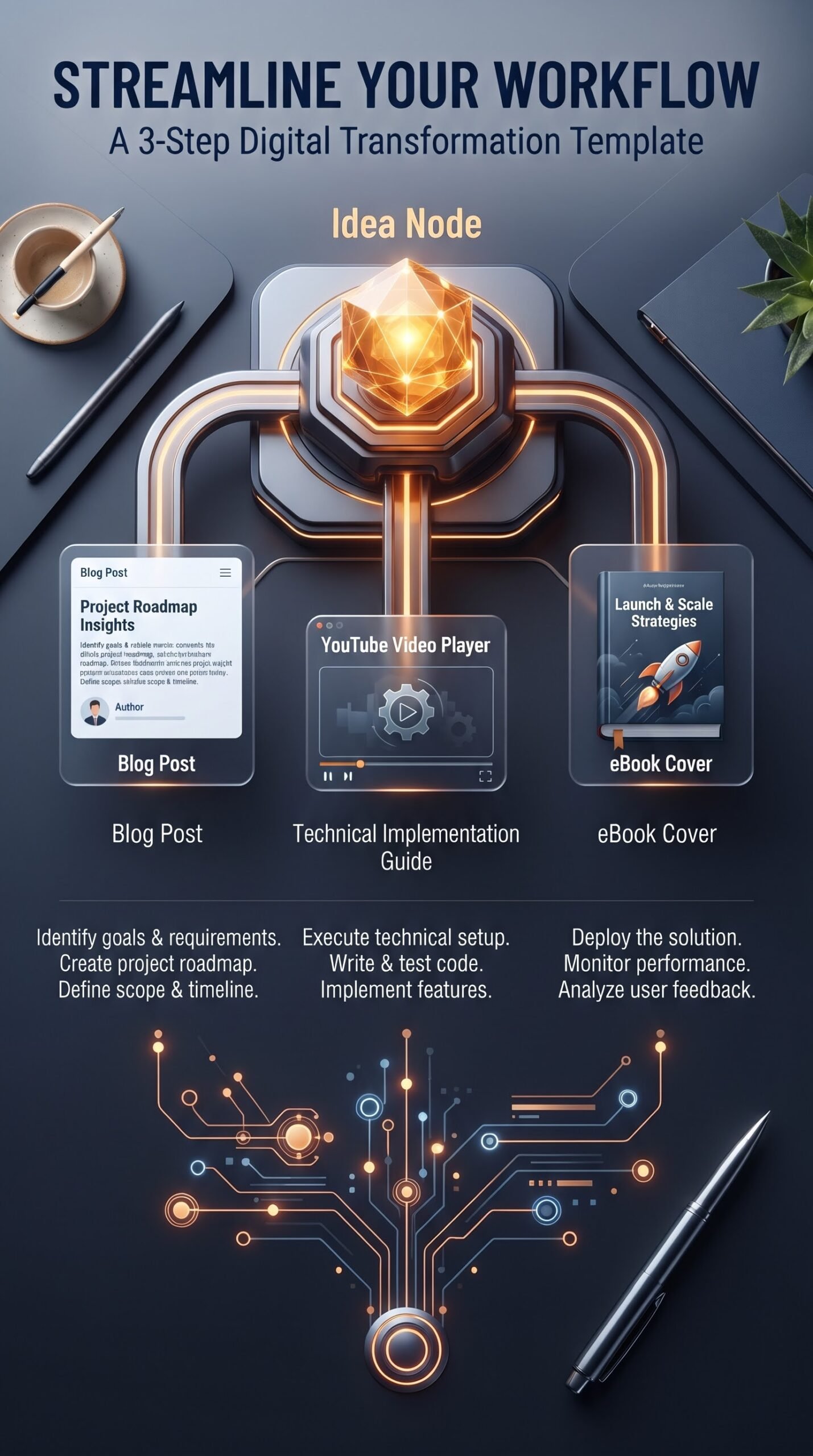
Instead of treating every piece of content as a separate project, you can use artificial intelligence (AI) to turn one well-developed idea into several different assets. A single topic could become an interactive assessment, a YouTube content series and even a short digital book.
This approach is sometimes called content repurposing, and it can make a considerable difference for independent creators, freelancers and small businesses working with limited resources.
1. Start With One Problem Your Audience Wants Solved
Before opening an AI writing tool, identify a specific problem your audience is trying to solve.
For example, imagine you run a small business consulting website. You could build an entire content campaign around the question:
Why are small businesses struggling to generate consistent leads online?
That question is broad enough to explore from different angles but specific enough to attract an identifiable audience.
You could investigate common problems such as poorly designed websites, confusing enquiry forms, inconsistent follow-ups and ineffective marketing.
The important thing is to start with a genuine audience problem rather than asking AI to produce random content ideas.
Once you have chosen your topic, research it. Look at questions people are asking, discussions in relevant communities and gaps in existing articles.
AI can help organise your findings, but your own judgement should determine which information is useful and worth publishing.
2. Turn the Idea Into an Interactive Scorecard
One of the most overlooked ways to generate engagement online is to give visitors something they can actually use.
Instead of publishing another article explaining why businesses need better marketing, create a simple marketing readiness assessment.
For example, visitors could answer questions about:
– Whether their website clearly explains their services.
– How easily customers can contact them.
– Whether enquiries receive timely responses.
– Whether they have a consistent content strategy.
– Whether they measure their marketing performance.
At the end, the assessment produces a score and practical recommendations.
This gives readers a reason to interact with your website instead of simply reading and leaving.
AI can help develop the questions, organise scoring categories and suggest recommendations for different results.
The best assessments are genuinely useful. Avoid designing questions that deliberately produce poor scores just to push visitors towards a product.
3. Turn the Same Topic Into a Faceless YouTube Series
Your original idea can also become the foundation of a YouTube content strategy.
You do not necessarily need to appear in front of a camera. A faceless channel can use narrated explanations, screen recordings, animations, illustrations and other relevant visual material.
Using our small-business marketing example, you could develop a series such as:
1. Five Reasons Small Business Websites Fail to Generate Leads.
2. How to Build a Better Customer Enquiry Process.
3. Why Following Up With Potential Customers Matters.
4. Simple AI Workflows That Save Small Businesses Time.
Each video explores a different part of the original subject.
AI can help with channel positioning, content pillars, video briefs, research organisation and publishing schedules.
However, remember that a content plan is not a finished video. You will still need to verify information, create or source visuals, produce the video and review it before publishing.
A consistent series built around one audience is generally more useful than uploading unrelated videos simply because an AI tool suggested them.
4. Expand the Idea Into a Short eBook
Here is where the strategy becomes particularly interesting.
Your original research and content can provide the foundation for a practical eBook.
Using the same example, you could create:
The Small Business Lead Generation Handbook: A Practical Guide to Getting More Enquiries Online.
A possible structure would include:
– Understanding how customers discover businesses.
– Building a website that communicates value.
– Creating effective enquiry forms.
– Improving customer follow-up.
– Using AI to organise marketing activities.
– Measuring results and identifying opportunities.
You could then use the eBook as a downloadable resource, a newsletter incentive or a product in your digital storefront.
AI can assist with outlining, editing and organising chapters. However, you should add original examples, useful explanations and proper fact-checking before considering the book finished.
A collection of AI-generated paragraphs is not automatically a valuable publication.
5. Can One Platform Help Organise This Entire Process?
If you want to experiment with this approach, it is worth looking at tools that bring different content-planning activities together.
One option is Build • Publish • Grow package.
The package includes three separate workspaces:
– Interactive Scorecard Studio: Helps create interactive assessments, scoring systems and personalised recommendations.
– Faceless YouTube Channel Studio: Helps organise channel positioning, content pillars, video briefs and publishing plans.
– KDP Book Publishing & Launch Studio: Helps organise book positioning, structure, listing preparation and launch planning.
The advantage is having dedicated planning environments for three different types of digital assets rather than trying to organise everything in one general-purpose AI chat.
It is important to understand the limitations, though. These are planning and content-organisation tools, not automatic publishing services. YouTube videos still need to be produced and uploaded, while books still need to go through the actual publishing process.
If you want to explore the package and see whether it suits your workflow, you can find it here:
[Explore the Build • Publish • Grow AI Tools](https://jvz8.com/c/
Review the product details, pricing and licence terms before purchasing.
6. Build a Repeatable Content System
The real benefit of this strategy is not producing three assets once. It is creating a process you can repeat.
For every new topic, follow a simple workflow:
1. Research a problem your audience cares about.
2. Develop one comprehensive, useful resource.
3. Extract an interactive assessment from the key questions.
4. Break the subject into several focused video topics.
5. Organise the information into a downloadable guide or eBook.
6. Link the different assets together through your website and email marketing.
For example, someone who discovers your YouTube video could visit your website to complete the assessment. After receiving their results, they might download your eBook for more detailed guidance.
Each asset introduces the audience to another useful part of your content.
You are no longer creating disconnected posts. You are building a connected content ecosystem.
Final Thoughts
AI has made it easier to research, organise and develop content, but having access to more tools does not automatically produce better results.
The most useful approach is to begin with a problem worth solving and then explore different ways of helping your audience understand and address it.
One strong idea can become an article, an interactive scorecard, a video series and a practical eBook. Each format reaches people differently, and together they can create a more consistent online presence.
You do not need to publish everything in one day. Start with one topic, develop it properly and expand when you have something genuinely useful to share.
That is a much more sustainable way to use AI for content creation.